Screens, Loneliness & the Brotherhood Men Need
Apr 10, 2026A man I know that is a firefighter shared something interesting with me, he has been in the department for years, holds a leadership role — told me something a while back that I haven't been able to stop thinking about. (see my video on this topic)
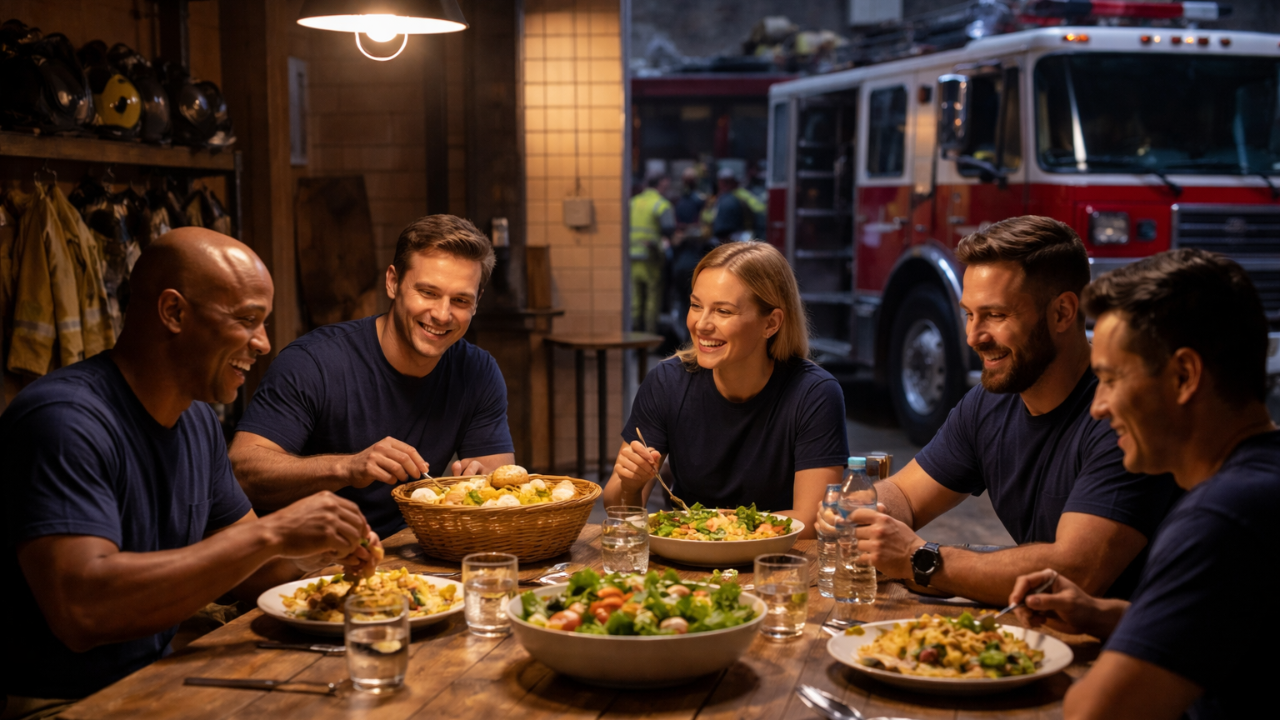
He said that when he started, the culture of the firehouse was built around a simple rhythm. When the crew wasn't on a call, they'd go out together. Grocery store, sometimes a market, whatever they needed. They'd come back and cook. Together. Sit down and eat. Together. Talk, give each other a hard time, laugh, decompress. Twenty-four, forty-eight, seventy-two hour shifts — long stretches of time where the shared meal was just part of how the team worked.
He said that's mostly gone now.
People grab fast food on their own. Come back, find a corner, put in earbuds, scroll through reels. Same building. Same shift. Separate worlds.
I want to sit with that for a minute, because I think it's about a lot more than dinner.
What he was describing — that old rhythm of shopping together, cooking together, eating together — wasn't just a meal. It was the connective tissue of the team. It was where you learned how the guy next to you takes his coffee, what he's worried about at home, what makes him laugh. It was where trust got built, not through a workshop or a team-building exercise, but through ten thousand small unremarkable moments of just being together.
And that's exactly what screens have quietly dismantled. Not dramatically. Not all at once. Just gradually, meal by meal, moment by moment, until the default is isolation and nobody quite remembers how we got here.
I work with men. A lot of men. And one of the most consistent things I see — across backgrounds, ages, circumstances — is a profound and often unacknowledged loneliness.
Not the kind men talk about easily. Men don't usually come into my office and say I'm lonely. They say they're stressed, or their marriage is struggling, or they've been drinking too much, or they just feel off and can't explain it. But underneath most of it, when we slow down enough to look, is disconnection. A lack of real brotherhood. Friendships that exist in theory — a contact in the phone, a guy from work — but don't involve anyone actually knowing them.
And screens have made this so much easier to avoid noticing. You can feel the sensation of connection — the dopamine hit of a like, the passive companionship of streaming something — without any of the vulnerability or presence that actual connection requires. It's connection-flavored. But it doesn't feed you the way the real thing does.
Women navigate this differently but aren't immune. The same gravitational pull toward curated digital interaction over messy, inconvenient, present-tense friendship is reshaping how all of us relate. Community is harder. Showing up is harder. The friction of real relationship — the scheduling, the vulnerability, the risk of being truly known — feels increasingly optional when your phone is always there offering something easier.
What my client is doing in that firehouse matters more than it might look like from the outside.
He's not just enforcing a meal policy. He's preserving a culture. He's saying, with his leadership and his presence, that the people in this building are going to know each other. They're going to cook together and eat together and be inconvenienced together and laugh together — because when the call comes in at 3am and someone's life is on the line, the team that ate together is the team that trusts each other. The team that trusts each other performs differently. Thinks differently under pressure. Looks out for each other in the ways that can't be mandated or trained.
And beyond the professional — these are human beings who deserve to flourish. First responders carry an enormous mental health burden in this country. The least we can do is protect the conditions that help them hold each other up.
I think about the men I sit with in my office, and I think about what they're actually hungry for. Most of them aren't looking for another group chat. They're looking for a table to sit at. Someone who knows their name and their story and shows up anyway.
Brotherhood doesn't happen on a screen. It happens in the grocery store aisle arguing about which pasta to get. It happens over a meal you cooked badly together. It happens in the accumulated weight of small, ordinary, unremarkable moments of choosing to be present with another person.
That firefighter is fighting for something sacred in that firehouse.
I hope more of us find a way to do the same.
Don't miss a beat!
New moves, motivation, and classes delivered to your inbox.
We hate SPAM. We will never sell your information, for any reason.
