When Asking Becomes a Trap | Boundaries vs. Requests
Apr 09, 2026There's a moment I see in therapy rooms all the time. Someone sits across from me, exhausted, and says some version of: I've told them what I need. I keep telling them. And nothing changes.
What they don't realize — what took me years to really understand — is that they're not stuck in a relationship problem. They're stuck in a cycle. And the cycle has a name. See more about this in my video on this topic.
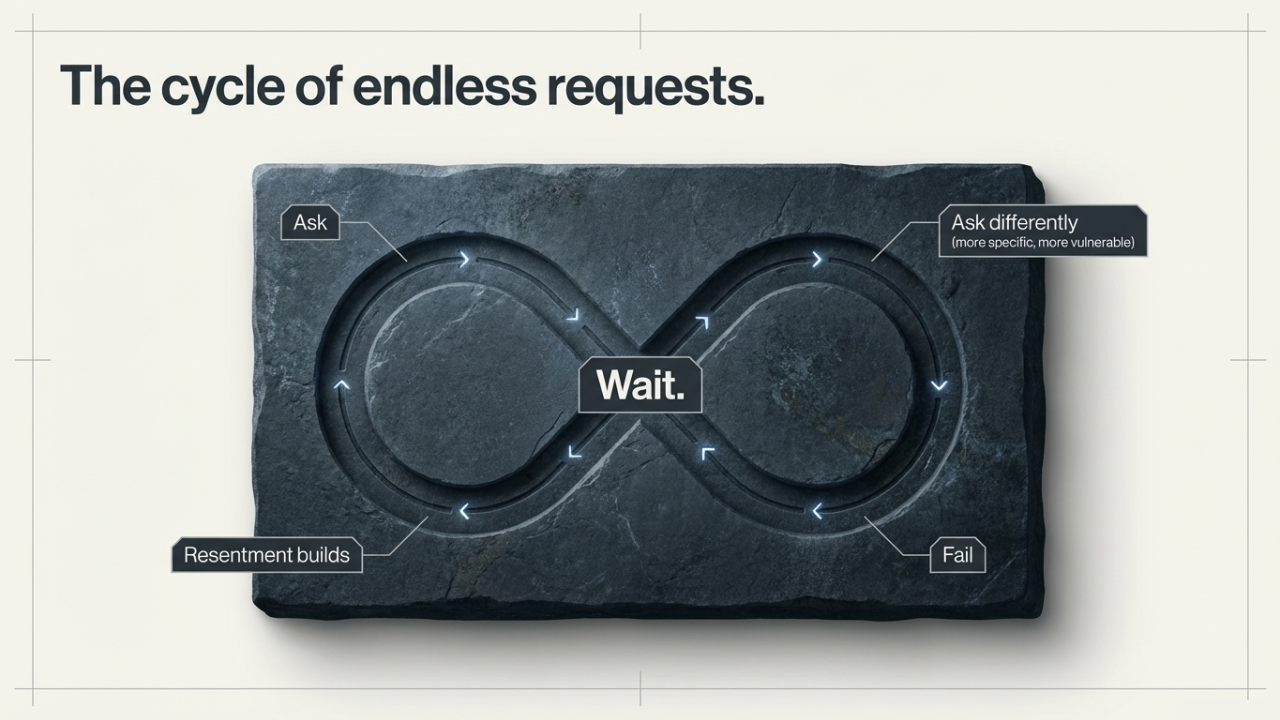
It usually starts simply enough. You have a need. You make a request. That's healthy. That's what humans do. But then something happens — your person doesn't come through. They can't, or they won't, or honestly it doesn't matter which, because you don't hear "can't." You hear "don't care."
So you come back around. Maybe I didn't explain it right. Maybe I need to be more specific, more vulnerable, more direct. So you ask again. And again. And each time you come back with nothing, the resentment builds a little more. The story gets a little darker. They know what I need. They just won't do it.
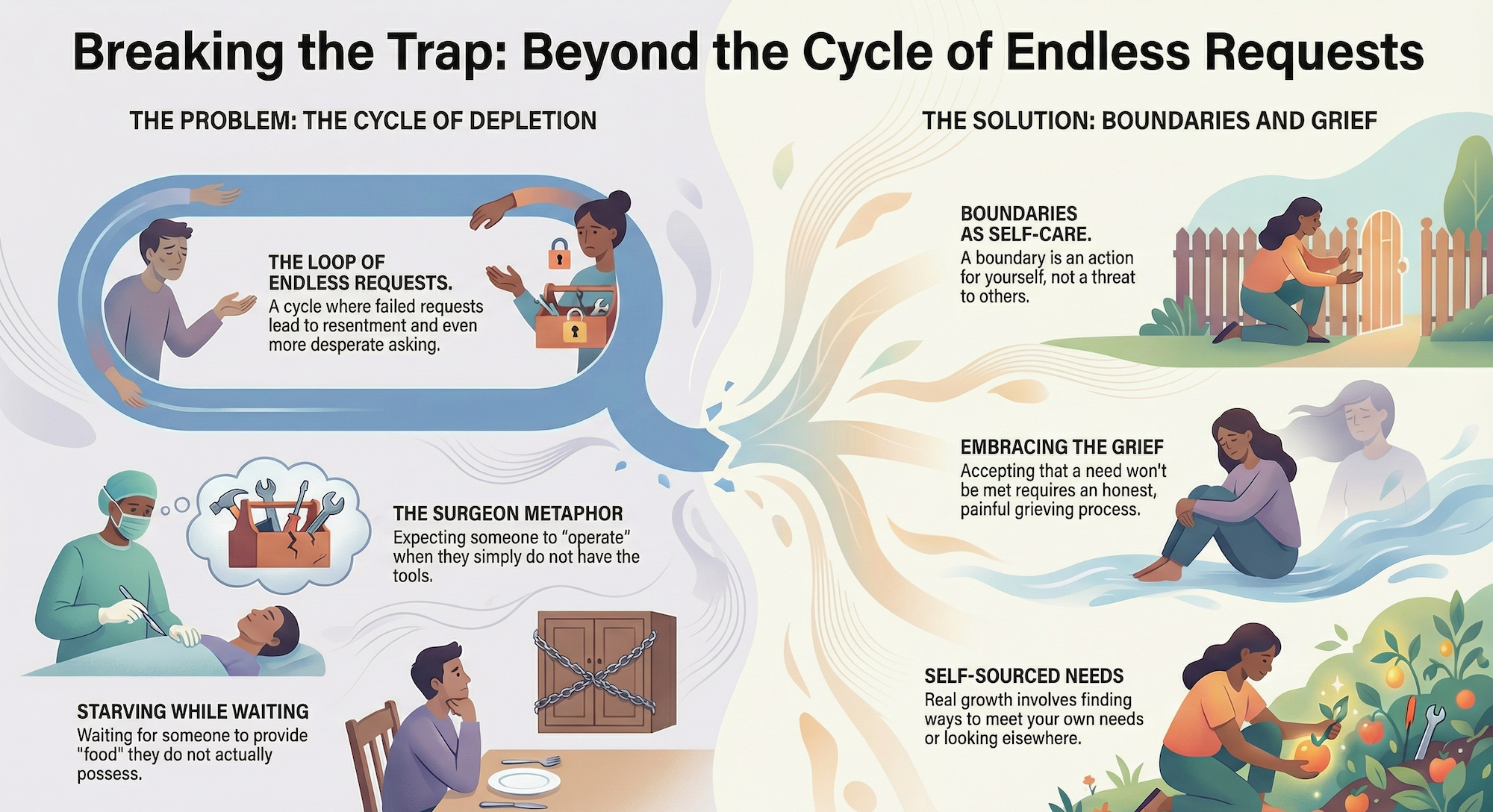
That's the cycle of endless requests. And it's brutal, not because anyone is being malicious — often they're not — but because you are slowly starving yourself while waiting for someone to hand you food they don't have.
Here's the reframe I use in session, and it's uncomfortable, so stay with me.
What if they can't meet your need? Not won't — can't?
I know. I know the instinct is to say, but they're capable of it, they just choose not to. And maybe that's true. But I want to suggest it might not matter as much as we think. Because whether they can't or won't, the result is the same: the need isn't being met. And you're still standing there asking. Still resentful. Still waiting.
There's a metaphor I've started using in groups. You're having a medical emergency. Your appendix is inflamed and you need surgery. You turn to the person next to you and say, You have to operate on me right now. And they look at you with genuine eyes and say, I'm so sorry. I don't know how to do that.
Is that cruelty? Is that rejection? No. It's limitation.
Now — maybe your brother is a surgeon. Maybe he could operate, technically, but he's not willing to do it for you, here, in this moment. And okay, that's painful. That's a real grief. But the result is still the same: you need a surgeon, and you're not getting one from him.
At some point, you have to stop trying to turn this person into a surgeon and find someone who can actually help.
That's where boundaries come in. And I mean real ones, not the punitive kind.
A boundary isn't a threat. It's not a line you draw so you can punish someone for crossing it. A boundary is something you do for yourself because you can't live sustainably in the cycle anymore. It comes from a clear, grieved recognition: This person is not going to meet this need the way I need it met. Not maybe someday if I ask the right way. Not if they just finally understood. Now. As things are.
There's grief in that. Real grief. I want to be honest about that. When you accept that someone you love cannot or will not meet a need that matters to you, that hurts. It's appropriate to let it hurt.
But on the other side of that grief, something opens up. You stop trying to operate on yourself with the wrong surgeon. You come back to your own need — what do I actually need here? — and you start asking better questions. Can I meet this need myself? Can I find it somewhere else? Or am I willing to reassess and discover that the need itself isn't quite what I thought it was?
Sometimes what I thought I needed from my partner, I discover I really need from myself. Courage. Trust. Permission to stop waiting for someone else to validate my experience.
That's not settling. That's growing up. In the best possible way.
The cycle of endless requests keeps us in a particular kind of pain — the pain of almost, of maybe-if-I-just, of repeated disappointment. A boundary, honestly made and honestly held, can actually end that cycle.
Not easily. And not without some grief.
But there's something on the other side of it that's worth walking toward.
Don't miss a beat!
New moves, motivation, and classes delivered to your inbox.
We hate SPAM. We will never sell your information, for any reason.
